
WFH Ikea — don't hunch over your laptop.
Format: Personal project · 1 month · independent research. Note: not a brand collaboration with IKEA.
The trigger
Average working hours: 7 hours per day. 5 of 8 WFH workers now prefer to work in their home offices rather than the sofa or the kitchen — for focus, and for a better work-to-personal-life transition. But many of the home offices weren't designed for eight-hour working days.
What the research showed
What kind of furniture do they use? Kitchen chairs, garden chairs, bedroom desks, dining tables.
What does this lead to? Slouched back, kids making fun of their posture, constant back ache and getting easily distracted.
Why don't they buy new furniture? Hard to find what's right; unaware of what's good for posture; too many options online; expensive; no space in the work environment.
The concept
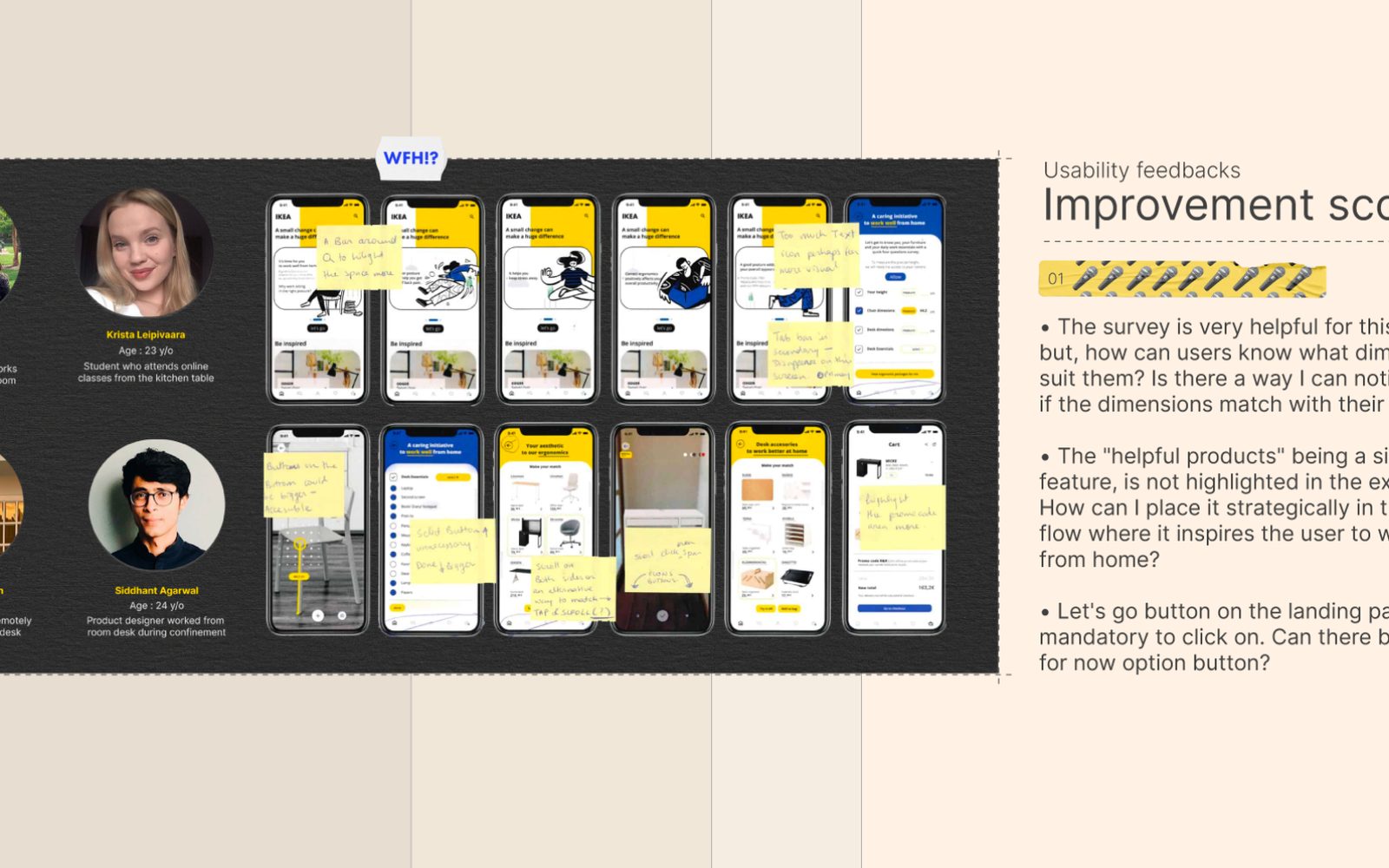
A tool inside the IKEA shopping experience that helps WFH users pick ergonomic furniture appropriate to their space — and that makes the trade-off between price, space and posture explicit rather than buried in product reviews.
What I took away
Furniture-shopping has a research problem disguised as a choice problem. Most users aren't deciding between two correct options — they don't know what "correct" looks like for their flat. The interesting design space is in the upstream questions, not the SKU page.
* This is a personal research project. It is not a commercial collaboration with IKEA. The IKEA name is referenced as the shopping context the concept was framed against.